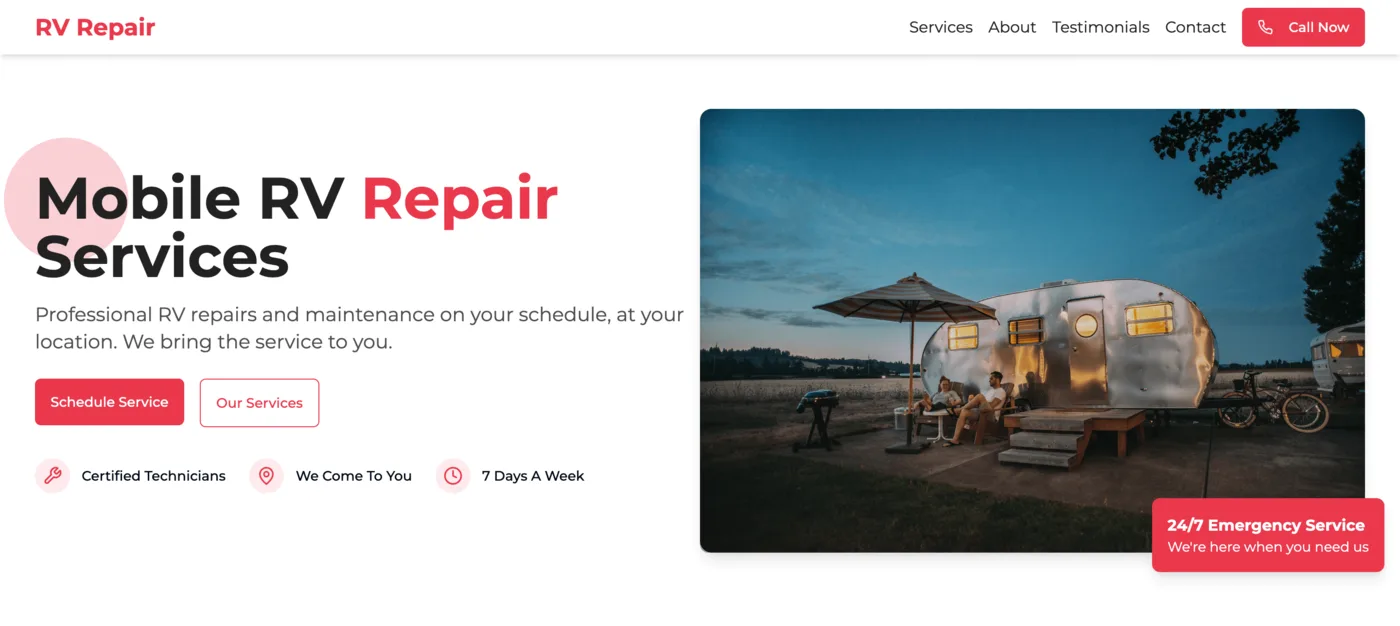
The experiment
This was an attempt to sell fast, mobile-friendly websites to local service businesses. The offer was not "I can code a website"; it was "your customers are searching online, your competitors have weak sites, and a simple local page can help you get chosen."
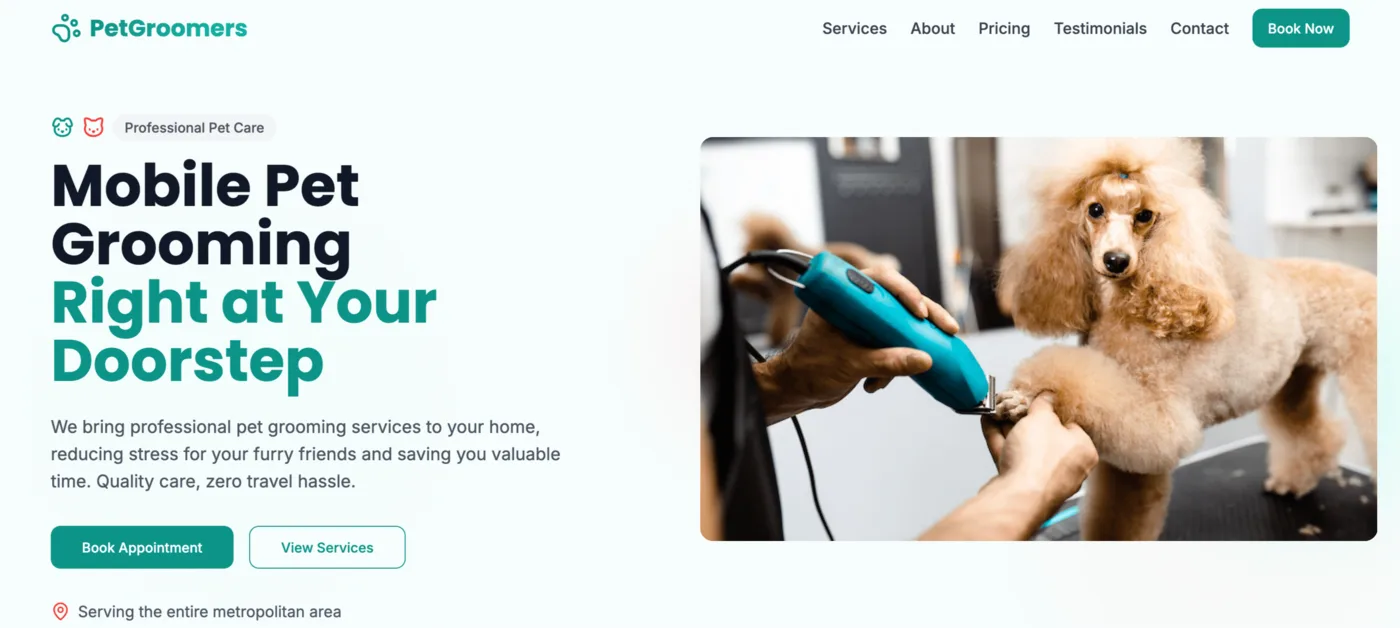
The two clearest niches were mobile RV repair and mobile pet grooming because both had urgent, local-intent searches and businesses that often had weak or missing web presence.
What I built
The repo is a static Tailwind site for the offer, branded as Accelerated Devs. It included:
- A main sales page with demand framing, service cards, pricing, process, and contact CTAs.
- Niche-specific cards for mobile RV repair, mobile pet grooming, tiny homes, elder care, and other local businesses.

- Mock landing pages to show what a finished client site could look like.
- Calendly-style booking copy and a constrained "limited spots" offer.
- Google Tag Manager wiring for basic funnel tracking.
The outreach thinking
The project was more about positioning than engineering. I was trying to answer:
- Which small businesses have enough search intent to care?
- Which ones often have weak websites?
- Can the offer be specific enough that a cold message feels relevant?
- Can mockups make the pitch concrete before a client exists?
The site copy was built around that logic:
<h3>Mobile RV Repair Services</h3>
<p>
  RV owners need urgent repairs on the road.
  Only 40-50% of techs have websites, giving you a competitive edge.
</p>
Why it failed
It did not turn into a repeatable business because the offer stopped at "better website" instead of owning a full lead-generation outcome. A local business does not really want a site. They want booked jobs, trust, and fewer dead-end inquiries.
The next version would need a tighter vertical, real outreach volume, proof from one paying customer, and a stronger package around leads, booking, SEO, and follow-up.
What I learned
This was useful because it forced the work outside the code editor. The hard parts were niche selection, copy, proof, distribution, and trust. The website was only the artifact.